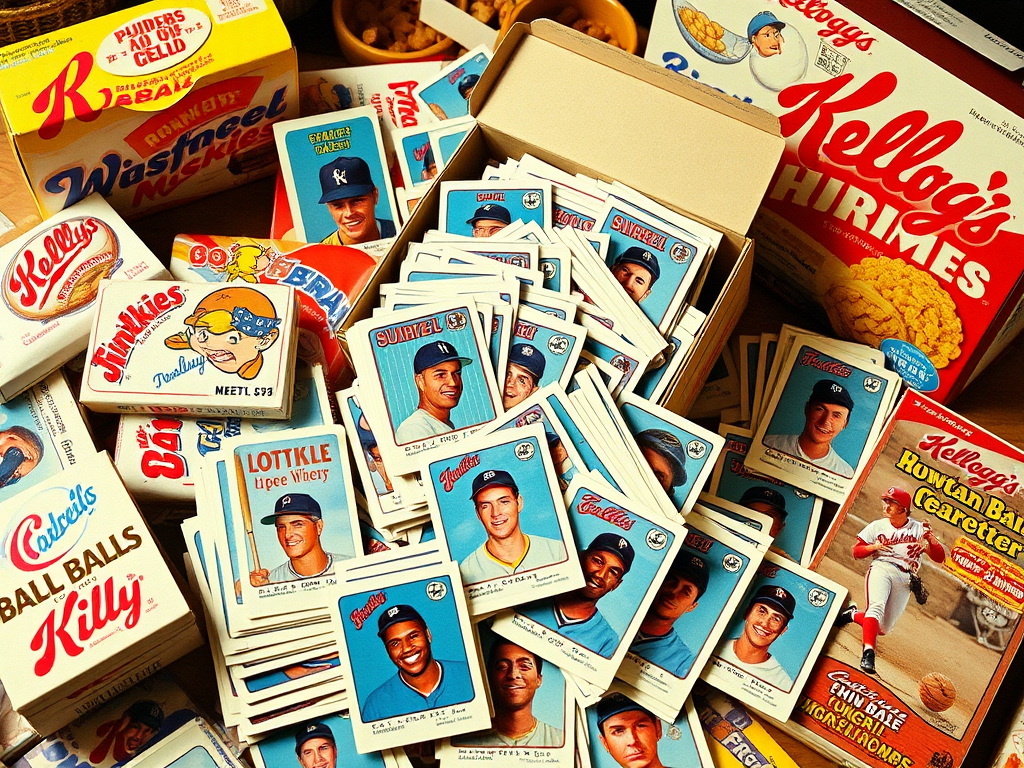
Once upon a time, the best prize in a box of cereal wasn’t the toy—it was a baseball card. Or maybe a panel of cards on a box of snack cakes, or even a promo slipped in with a fast-food meal. For those of us who grew up in the late 20th century, the landscape of baseball cards was far more diverse, peculiar, and—dare I say—beautifully bizarre than it is today. This was the glorious age of “oddball” product tie-in cards, a breed of collectible that has largely disappeared, taking with it a certain charm the hobby desperately misses.
These weren’t your everyday Topps or Fleer packs. These were the cards you earned by consuming. And while their departure leaves a nostalgic ache, their story helps us understand the evolution (and revolution) of the sports card market.
The Cardboard Concession Stand: A Brief History of Tie-Ins
The idea of a baseball card as a promotional giveaway is as old as the game itself. From 19th-century cigarette packs to early 20th-century candy boxes, cards weren’t sold—they were the bonus prize, the incentive to buy the primary product. That tradition saw a glorious resurgence from the mid-1970s through the early 1980s.
- Hostess (1975–1979): Few thrills compared to carefully cutting a multi-card panel off the back of a Twinkies box. These sets offered vibrant, action-packed photos—even if the cards were prone to butter stains and scissor mishaps.
- Kellogg’s (1970–1983): The kings of 3-D. Kellogg’s cereal boxes brought us lenticular cards with a dynamic, futuristic look that set them apart from everything else on the market.
- Burger King (late 1970s): Tucked into kids’ meals, these team-focused cards gave collections an instant boost. Quick to get and simple in design, they reflected the commercial purpose but carried real collector appeal.
K-Mart: A Different Kind of Oddball
Then there was K-Mart. Unlike the food tie-ins, the K-Mart sets were their own product, sold in complete boxed sets right at the register. They embodied the spirit of the store itself: affordable, accessible, and right there under the blue light.
This was never more apparent than in the 1982 Topps K-Mart 20th Anniversary set. It didn’t feature actual rookie cards—it featured pictures of them. A meta-commentary on the hobby, it was the baseball card equivalent of a Kraco car stereo: a low-cost stand-in for the real thing. It reflected both the desire for cards that were out of reach and the joy of grabbing something cheap and cheerful off the shelf.
The Great Vanishing: Why the Oddballs Disappeared
So what happened? A few key shifts doomed the era of oddball promotions.
- Oversaturation: The “Junk Wax” flood of the late ’80s and early ’90s devalued anything mass-produced, including promos.
- Rising licensing costs: As card companies and leagues tightened control, it became expensive for a cereal or fast-food chain to get in on the action.
- Changing tastes: Collectors shifted toward premium products, inserts, autographs, and parallels—the exact opposite of the mass-distributed tie-in card.
In short, the hobby professionalized, and the humble oddball no longer fit.
The Final, Quiet Fade
Even after K-Mart, a few last-ditch efforts tried to keep the tradition alive:
- McDonald’s/Upper Deck MVP (1997): The last major fast-food promotion of its kind, a late echo of the old model.
- Subway (2004): A small-scale regional attempt, showing that the concept hadn’t vanished overnight but faded slowly, quietly, almost unnoticed.
By then, the world of cards had changed too much. The mass-market tie-in was a victim of its own success—helping popularize collecting, but also paving the way for a market that no longer had a place for it.
Epilogue: Still in the Snack Aisle of Memory
Oddball cards may be gone from store shelves, but they live on in shoeboxes, binders, and nostalgia. They remind us that sometimes the most charming collectibles weren’t pulled from a hobby shop pack, but cut from a Twinkies box or found next to a burger and fries. They were imperfect, they were accessible, and they were fun. And maybe, in the end, that’s what makes them so unforgettable.
Where to Hunt Oddballs Today
While the golden age of oddball cards may have faded, the spirit of quirky, offbeat collecting is very much alive. If you’re looking to dive into the world of unconventional cards, three Whatnot streams stand out—not as a ranked list, but as a trio of go-to spots for finding the strange and delightful. Each brings its own flavor to the hobby, offering everything from vintage oddballs to modern-day curiosities.
- cardboardgoodies: Known for their weekly Oddball Stream every Sunday night (or Saturday), featuring 1970s to 1990s baseball, basketball, and football singles, including plenty of offbeat gems.
- professorflood: Offers a mix of vintage and modern cards, with a focus on unique and lesser-known items that cater to the discerning collector.
- bigorange30: Specializes in vintage Hall of Fame cards from the 1950s to 1970s, providing a treasure trove for those seeking classic oddballs.
These streams are a testament to the enduring appeal of oddball collecting, proving that while the landscape has changed, the hunt for the unique and the unusual continues.
 El Cardquistador
Leave a comment