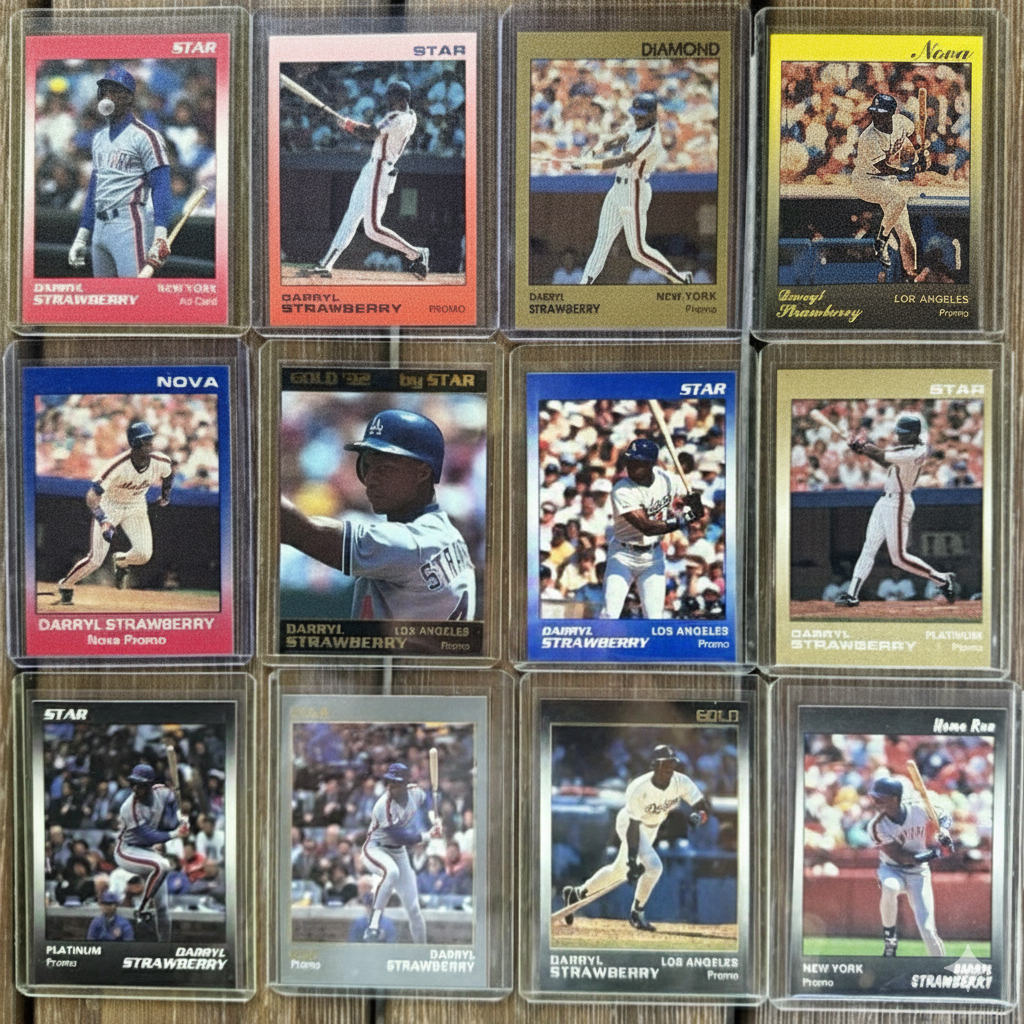
The Allure and the Fog
Star cards were supposed to be premium—direct-to-dealer exclusives, foil-tiered rarities. For a while, they felt like the underground answer to Topps and Fleer: quirky, boutique, and full of potential. But the deeper I went, the more I realized I wasn’t collecting cards—I was collecting confusion.
Gold, Silver, Platinum… and Nothing Official
Star’s foil hierarchy was never clearly defined. Platinum was marketed as the top tier, but even that came with undocumented color variants and finish inconsistencies. Gold and Silver were everywhere—sometimes indistinguishable from promos, sometimes not. Unlike Topps or Fleer, Star never issued an official checklist. Collectors were left to guess, argue, and patch together lists from dealer sheets and hobby magazines.
Rarity without documentation isn’t rarity—it’s theater. And Star was the stage.
Promo Fog and Identity Crisis
Dealer sheets, magazine inserts, show promos—often identical to base cards. Some had subtle tells (no stats, different backs), others didn’t. The line between collectible and marketing material was erased. Even within the same set, multiple versions appeared with no clear explanation.
When everything is a promo, nothing is.
The Warehouse Fiasco
In the early 1990s, Star claimed to discover a stash of unsold inventory—cards from the 1980s, suddenly available. Sold through Shop at Home TV, often in bulk, with little provenance and even less oversight. Collectors were told they were buying rare, original stock. What they got was a mix of authentic cards, factory rejects, and unauthorized reprints.
The flood of cards diluted trust, confused the market, and left collectors holding question marks.
Scarcity only matters if you can trust the source. With Star, trust was the first casualty.
Why I’m Done
I’ve spent years building checklists, chasing oddballs, and documenting the overlooked corners of the hobby. But Star? I’m leaving them out. Not because they don’t exist—but because they don’t hold up. Between promo fog, foil-tier ambiguity, and warehouse drama, they’ve crossed the line from collectible to unreliable.
I’m not bitter. After decades of believing, I’m done.
 El Cardquistador
Leave a comment