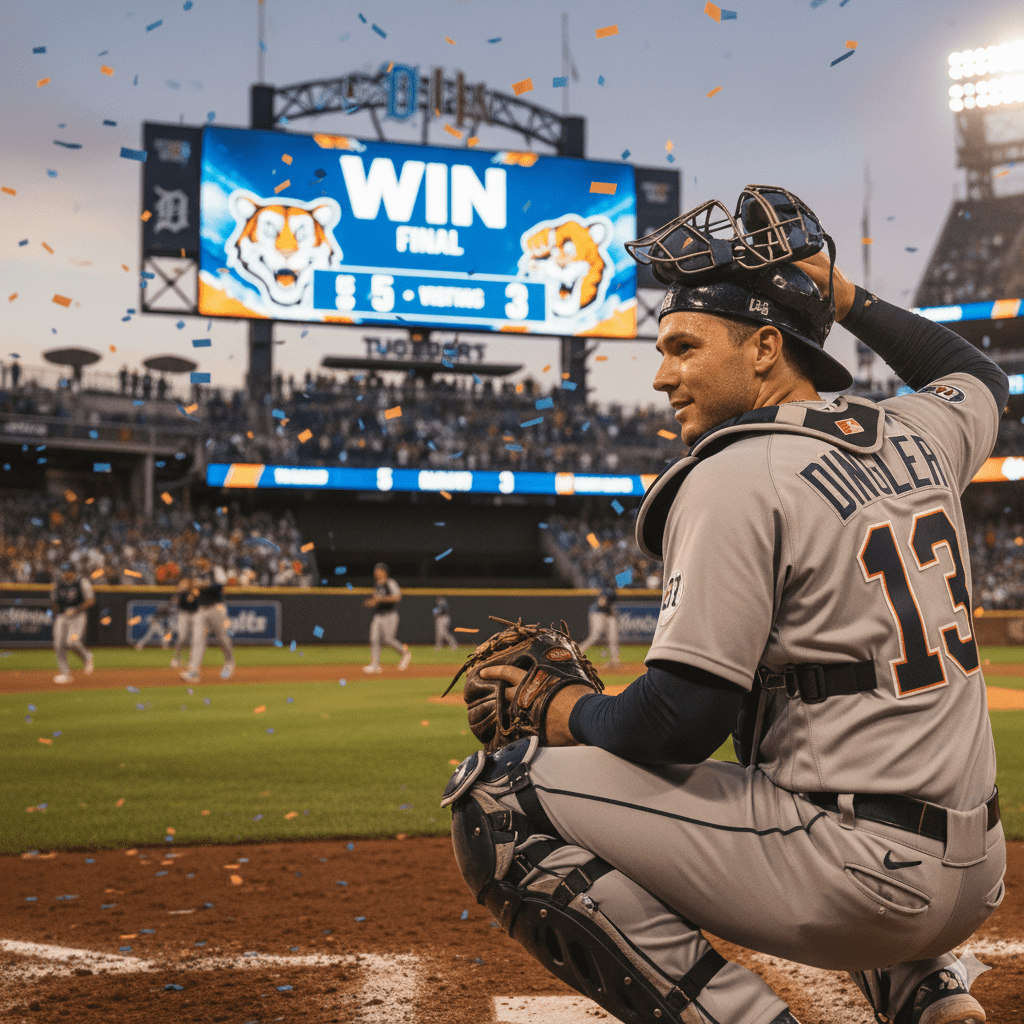
Dillon Dingler doesn’t flash. He orchestrates.
Even in his first MLB innings, you feel it—the tempo shifts, the sequencing logic, the way pitchers lean into his framing like it’s a second spine. His bat’s cold—.167 since debut, with long stretches of silence—but behind the plate, he’s a conductor. And that’s not just rare. That’s legacy.
He’s not the first to win games without gaudy offensive numbers. He’s just the newest in a lineage of catchers who shaped outcomes invisibly—through presence, not production.
Jim Sundberg, a .248 career hitter with 95 home runs, anchored Texas rotations through the late ’70s and early ’80s with six Gold Gloves and a reputation for game-calling pitchers swore by. Jon Matlack, Fergie Jenkins, and Charlie Hough all credited Sundberg with extending their careers. He didn’t just catch—he translated.
Bob Boone, a .254 hitter with 105 home runs and seven Gold Gloves, was a technician with the mind of a field general. He caught Steve Carlton, Nolan Ryan, and Don Sutton—three wildly different arsenals and personalities. Boone adapted, adjusted, and anchored. His value wasn’t in the box score. It was in the silence between pitches.
Mike LaValliere, a .268 hitter with 18 home runs, was a framer, a thrower, a guide. During the Pirates’ early ’90s rise, he caught Doug Drabek, John Smiley, and a young Tim Wakefield. His glove work steadied a staff that had no business contending. His impact was felt in every inning.
Now, Dingler’s catching Tarik Skubal, Reese Olson, and Sawyer Gipson-Long. Young arms, live stuff, and the kind of raw energy that needs harnessing. Dingler directs it, steadies it, turns it into wins. You can see it in the mound visits, the sequencing, the lack of shake-offs. He’s not just receiving—he’s shaping.
He’s in good company. Not because he’s matching their stats, but because he’s matching their presence. Sundberg, Boone, LaValliere—they didn’t need to hit to win. They needed to anchor. And Dingler’s doing just that.
 El Cardquistador
Leave a comment