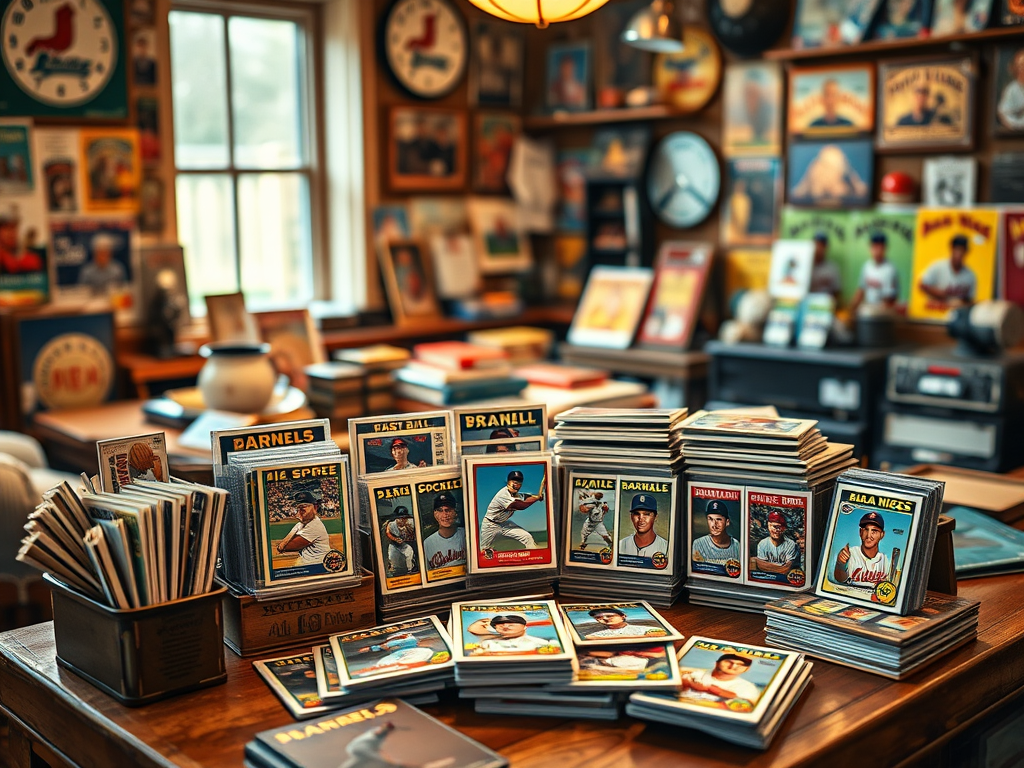
The Collector’s Journey Home
The year was the early 90s, and my collecting days were over. A cross-country move loomed, and, honestly, I had lost all interest in baseball after the strike. Most of what I had collected in my teens—my binders of memories—were given away. I only clung to a small handful of cards: a couple of ’70s Al Kalines, the ’84 Fleer Darryl Strawberry rookie I got for my birthday, and a ’74 Topps Dave Winfield rookie I had managed to scrape my chore money together for. These were the survivors.
As a much older man now, I felt the urge to put together some of what I’d given up. I discovered some old game highlights on YouTube, like Tom Seaver’s no-hitter, and a spark was reignited.
I started on eBay, sourcing some key singles and junk wax era packs. It was fun, but it lacked something essential. As a teenager, I had a small group of people I was collecting and trading with, and that community was gone. The hunt felt solo.
And then I stumbled onto Whatnot. It certainly wasn’t new, but it was new to me. And in an instant, it gave me community.
Whatnot: The Revival of Community
I started right off, finding shows that focused on my interests, grabbing items left and right. It was a rush—a full-throttle expansion of interest that, eventually, led to a full-on loss of collection focus. I wrote about this before: I don’t have a collection; I have a storage problem.
But today, I want to talk about those glorious months in between “almost nothing” and “too much,” and why Whatnot is a boom for new and returning collectors.
Everything you had, or now want, is available—or at least a related product is. Sellers are running the product they have on hand, in a way, like a retail store. But the key is that a “browse through the right neighborhood” is available 24/7, every day of the year. This is a genuinely fun way to discover things you may have forgotten, or even ignored, a quarter-century ago.
The Junk Wax Gateway and the Thrill of the Cheap Break
For new collectors, there are countless streams focused on staple fan favorites like Ken Griffey Jr. and Bo Jackson. I wrote a few weeks back about what I called the “Bo Jackson bubble”—a host of new people finding the platform, feeding on the available junk wax era cards, and temporarily driving up prices.
What I failed to recognize is the fun and the utility of this phenomenon. It’s new and returning collectors getting excited again and filling their boxes and binders.
For both new and returning collectors, there are entire streams focused on junk wax era packs, which still go for significantly less than modern product. They too can experience the “thrill” of opening 1990 Score looking for the Bo Jackson shoulder pads card, or 1989 Donruss looking for a Ken Griffey Jr. rookie. And it’s cheap—well, compared to a modern pack.
I say “thrill” because if you are like me, you are quickly reminded of the truth: it’s 2025, and if 35-year-old packs are still available for two or three dollars each, there is an ocean of this stuff. For better or worse, from a pure value perspective, it’s junk. But it’s also fun, and it helps you in the critical first step: filling out a starting collection. It’s the perfect, low-risk on-ramp.
The Whatnot Arc: From Consumption to Focus
Once you add in the community, find sellers you like, and connect with other collectors, your interest—like mine—will probably expand. Before you know it, you have a nice collection, expanded to these new interests, maybe adding some more expensive and important pieces, and embracing a player you never knew you liked.
You rinse and repeat, and then, perhaps, you end up like me.
I craved the community but also needed to go back to the solo hunt that got me here. The Whatnot Arc is the moment the collector pivots from a high-volume, community-driven buying spree to a more strategic, targeted hunt.
I found myself quietly working on the specific pieces I was targeting—cards with personal meaning, high-grade versions of my childhood favorites—and relegating Whatnot auctions to a second-tier source. I still stay in the community, offering occasional support and enjoying the chat, but the focus has shifted.
I expect I’m not alone in this. It’s a common—and even healthy—trajectory. Whatnot’s greatest service is pulling us in with low-cost nostalgia and instant community, then tempering us into disciplined collectors.
 El Cardquistador
Leave a comment