The Charge of Phoniness
Frank Zappa once dismissed “all that phony stuff on sports,” lumping it in with the spectacle and distraction of mass culture. His view—shared by many who see sports as a societal anesthetic, a bright, commercialized diversion from civic and political engagement—has always been a powerful counterpoint. Zappa saw a billion-dollar machine manufacturing a trivial obsession.
The Rhythm Beneath the Noise
But here’s the thing: sports aren’t just noise. They’re rhythm. They’re ritual. They’re one of the last places where tribal instincts can be exercised—and exorcised—without blood, without war, without permanent fracture.
A Sandbox for Disagreement
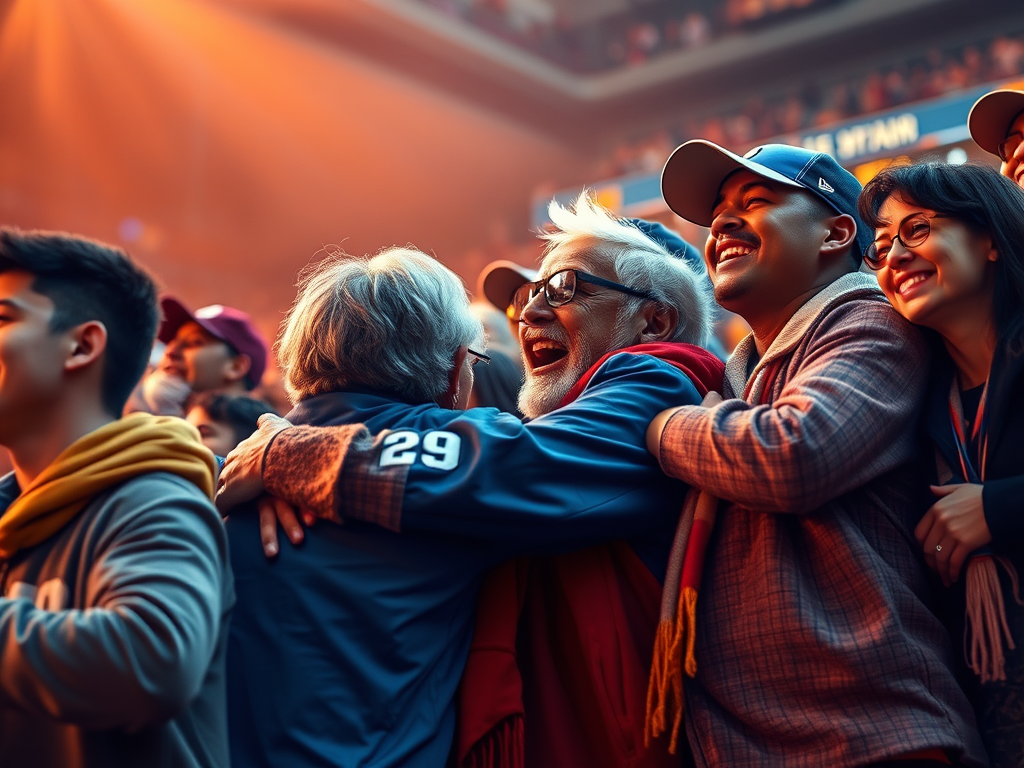
In a world where disagreement feels like a threat, sports give us a sandbox to argue, cheer, and mourn together. You can root for different teams, yell at each other for nine innings, and still grab a beer or a slice afterward. It’s a shared language that doesn’t demand ideological purity—a vital stage for human connection, even if the industry itself often functions as a cultural distraction.
From Fiction to Feeling
Think of that moment in Major League—when the Cleveland Indians finally win the big game. The grizzled fan and the punk rocker with the green mohawk hug in the bar as the crowd erupts. That’s not just a movie beat. That’s what sports do. They collapse difference into celebration. They give strangers a reason to talk. They let fathers and sons bond over cardboard legends, and kids build identity through team colors and box scores.
Fernandomania and the Power of Reflection
Or look at Fernandomania in 1981. When Fernando Valenzuela took the mound for the Dodgers, he didn’t just win games—he healed a decades-old rift between the team and L.A.’s Latino community. Families displaced from Chavez Ravine, long alienated from the franchise, suddenly saw themselves reflected in the game. Fernando’s rise turned Dodger Stadium into a place of pride and belonging. He wasn’t polished—he was real. And that realness built bridges where bitterness once lived.
Jackie Robinson’s Covenant
More profoundly, consider Jackie Robinson in 1947. His debut for the Brooklyn Dodgers wasn’t a personal whim—it was a role thrust upon him by Branch Rickey, a deliberate move that launched the Civil Rights Movement into the public square. Rickey needed a man with the talent to succeed and the courage to endure. Robinson accepted that agonizing covenant, confronting and breaking the race and class barriers that had segregated American life for generations. The language of competition and merit, played out on the national stage, became a revolutionary catalyst that forced the country to face its own ideals.
Luis Tiant and the Reunion That Transcended Borders
And then there’s Luis Tiant in 1975. After fourteen years of separation, his parents were finally allowed to leave Cuba and see him pitch in Boston. His father, a legendary pitcher himself, watched Luis take the mound in the World Series. That reunion—caught on camera, soaked in tears—wasn’t just personal. It was political, cultural, and deeply human. Baseball made it possible. Baseball gave them that moment.
Common Ground in the Game
Sports aren’t phony. They’re one of the last places where we can disagree without burning bridges—where the spectacle can briefly, and powerfully, transcend its commercial shell. Where we can still find common ground in the crack of a bat or the thud of a game-winning field goal sailing through the uprights.
 El Cardquistador
Leave a comment